TL;DR / What You Need to Know:
- The 10% Rule: Divide the purchase cost of the inflatable by 10 to find your base hire price.
- Three-tier packages: Offer small, medium, and large options to nudge customers towards more profitable choices.
- Special pricing: Charge more for unique or themed equipment (e.g. Halloween) due to its exclusivity.
- Seasonal adjustments: Increase prices by 20–30% during peak-demand periods like bank holidays and summer weekends.
- Annual review: Raise your prices each year to keep up with costs and avoid losing profitability.
Price Is More Than a Number, It’s Your Survival Strategy
Setting the price for your bouncy castles isn’t just about crunching numbers. It’s a decision that will determine whether your business grows or gets stuck in an endless cycle of hard work with little financial return. When you’re starting out, it’s tempting to lower your prices to bag those first customers. But that path leads to a dangerous trap: being constantly busy, yet seeing little money left at the end of the month.
The 10% Rule: Your Starting Point for Pricing
If you’re just starting out or want to rethink your pricing strategy, the 10% rule is a valuable tool. The goal is simple: recover your investment in an inflatable within 10 hires. If you buy a piece of equipment for 3,000€, your target is to hire it out at 300€ per event. This figure serves as a baseline, not the final price.
In your first few months, hitting this target might feel tough, as you don’t yet have a track record with customers. Over time, however, this metric helps you make more confident decisions about which equipment to buy. Here’s a practical example: if you’re thinking of buying a 15x16m combo unit with two slides, divide the cost by 10 and see whether the resulting figure is competitive in your local market. If it is, you’re on the right track.
It’s important to stress that this number isn’t set in stone. After applying the 10% rule, take a look at your competitors. If everyone in your area is charging 280€ for a similar piece of kit and your calculation gives you 300€, you might need to tweak it. Think of the rule as a compass, not a fixed destination.
Create Small, Medium and Large Packages to Sell More
One of the most effective ways to boost profitability is to offer three package options. This technique, used successfully in sectors like hospitality and food service, works wonders in the inflatable-hire business. When presented with three alternatives, customers tend to avoid the cheapest option (feeling it’s “too little”) and the most expensive (seeing it as “too much”), naturally gravitating towards the middle choice.
In practice, your packages could be structured like this:
- Small Package: A 3x3m square bouncy castle with a single straight slide.
- Medium Package: A 4x6m inflatable with two slides (double lane).
- Large Package: A 8x12m inflatable with two slides, offering far more space and fun.
The magic happens when a customer picks the medium option and, during the booking process, your team member suggests upgrading to the large for a small extra charge. Many customers say yes, boosting your average order value. Also, keep a limited number of small units in your fleet. When they’re booked up, naturally offer the larger options, steering customers towards a more profitable hire for you.
Special Equipment Deserves Special Prices
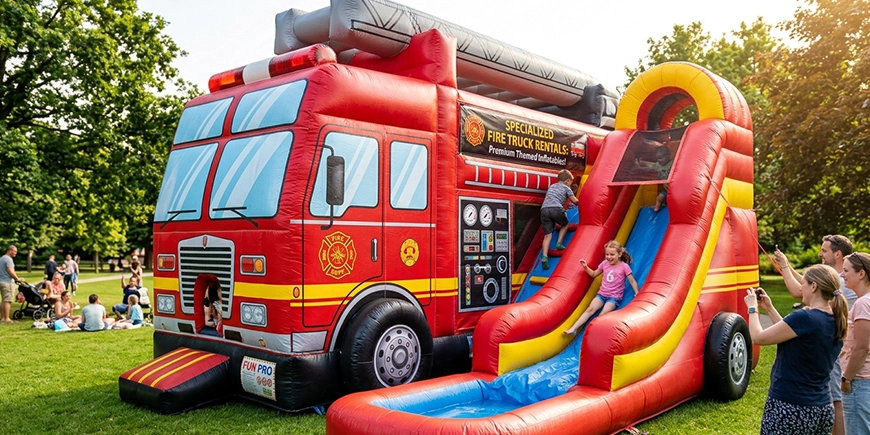
Not all inflatables are created equal. Some pieces, because they’re unique or themed, have more seasonal demand and warrant a different pricing strategy. If you have a fire-engine-shaped bouncy castle or a Halloween-themed model, you’re offering something your competitors probably don’t have.
Consider the case of a fire department that was celebrating 32 years of service. For the community event, they wanted an inflatable structure that would stand out, and they found exactly what they needed in your catalog. These customers are willing to pay more for equipment that breaks the mould and aligns with their message or event.
This type of equipment, such as Christmas or zombie-themed models, has a very short hire window, often limited to September and December. To justify the investment and recover your costs more quickly, you should set a higher price than for standard equipment. Demand is lower, but the exclusivity allows you to charge more per hire.
Adjust Prices During Peak-Demand Periods
If there’s one time when you can’t afford to miss the chance to earn more, it’s during bank holidays and high-traffic days. National holidays, for example, are periods when families and communities organise events and demand for inflatables goes through the roof. On these days, your business works at full tilt, with 12- to 14-hour shifts.
During these periods, operating costs go up: fuel for deliveries, overtime for staff, and even small gestures like buying meals for the team. If you keep your regular prices, these extra costs will eat into your profit margin. The solution is to add a 20–30% surcharge to hires during these peak days.
The logic is simple: demand is so high that customers are more focused on securing the equipment than on comparing prices. What’s more, many of these customers are one-off bookers who find you through online searches, not regulars who might feel penalised by a temporary hike. This practice is common in hotels and airlines, and in the inflatable-hire business, it makes perfect sense.
Reviewing Prices Annually Is Essential for Business Health
The cost of living and operating costs go up every year. Fuel, insurance and staff wages are no exception. If your hire prices stay frozen year after year, you’re effectively losing money. That’s why it’s crucial to schedule an annual price review.
A useful indicator of whether it’s time to raise your prices is your close rate. If you’re closing 9 or 10 out of every 10 quotes you send out, that’s a clear sign your prices are below market. On the other hand, if you’re only closing 3 or 4 out of 10, before you cut your prices, take a look at your sales process. A slow response to a quote request could be putting customers off, not the price itself.
Before investing in more staff, vans or equipment, consider raising your prices. This is the most direct and effective way to increase profitability without adding operational complexity. An annual increase, even a small one, aligned with inflation and rising costs, ensures your business stays healthy and sustainable in the long run.
Between the Lines
Pricing an inflatable hire is a balancing act between what the market will bear, the value you deliver and the costs you incur. Starting with the 10% rule gives you a solid foundation. Offering three packages steers customers towards more profitable choices. Charging a premium for unique equipment and raising prices during peak times are strategies that protect your margins.
Finally, reviewing your prices annually and monitoring your close rate are practices that keep you in control, preventing operating costs from eroding your profits. Adjust, test and refine constantly. The right price isn’t the one that makes you work harder, it’s the one that makes you work smarter and more profitably.
Inflated Greetings!
Did you like this content? To stay up-to-date with all the news, follow our social channels in the footer.