
How to Boost Profits Without Manufacturing a Single New Unit
The story goes that John D. Rockefeller, the oil baron, became a billionaire not just by selling oil, but by paying attention to what all his competitors were throwing away: the sticky residue at the bottom of the barrels. While others saw rubbish, his team saw 19 new products, from Vaseline to petrol.
In your world, the raw materials are vinyl, nylon, and air. But the principle is exactly the same.
Your “Barrel Dregs” Are a Hidden Treasure
While your competitors focus solely on selling more inflatables, the real opportunity lies in what’s left over, in what is considered “waste” or a “problem”. The question that made Rockefeller a billionaire was: “What are we throwing away that someone would pay for?”
Let’s apply that logic to your factory.
1. Total Raw Material Utilisation
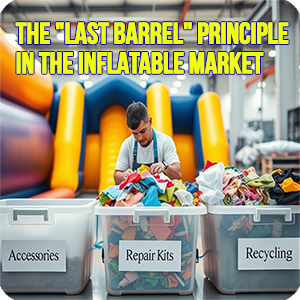
The off-cuts of PVC tarpaulin or nylon fabric are your most obvious waste. You see them as scraps. We see:
- An Accessories Line: Tote bags, wash bags, key rings or wallets made from printed off-cuts.
- Repair Kits: Instead of discarding them, package smaller off-cuts and sell them as patching kits for your clients (hire companies and parks).
- Catalogue Samples: Send fabric swatches to B2B clients as premium sales material.
2. Monetise Your “Digital Waste”
Does your team generate hours of content with no direct commercial value? Think again.
- Production Time-Lapses: A quick video of a giant castle being manufactured is gold for social media and demonstrates your know-how.
- 3D Models & Design Files: Already created 3D models for engineering? Package and sell them as an “asset pack” for architects or event designers.
- Simplified Technical Manuals: Turn complex repair manuals into infographics or e-books and sell them as training material for hire companies.
3. The Most Valuable Byproduct: Knowledge
Rockefeller didn’t discover Vaseline by himself. He paid engineers to study the waste. Your knowledge of manufacturing is your most underutilised asset.
- Consultancy: Offer paid consultancy for new market entrants or for hire companies wanting to understand product durability.
- Online Courses: Create a mini-course on “How to Choose the Right Fabric for Each Type of Inflatable” or “Weld Inspection to Prevent Accidents”.
Implementing the Principle on Your Production Line
This isn’t about turning into a handbag company overnight. It’s about adopting a mindset.
- Conduct a “Waste” Audit: What is being thrown away on the factory floor? And in the administrative department?
- Ask “Who Would Pay For This?”: Your off-cuts are rubbish to you, but they’re cheap raw materials for a local artisan. Your knowledge is obvious to you, but it’s a mystery to a new hire company.
- Run a Pilot Project: Choose a single idea – for example, the repair kits – and test it with 10 of your best clients. Adjust based on their feedback.
Between the Lines
The race to manufacture the cheapest inflatable is a game of ever-shrinking margins. The true competitive advantage, as Rockefeller showed, isn’t in pumping out more, but in being smarter with every single gram of resource that already passes through your hands. Your company’s next revenue stream isn’t from a new client; it’s literally in what falls on your factory floor.
Inflated Greetings!
Did you like this content? To stay up-to-date with all the news, follow our social media channels in the footer.